Home › Board & Train

Board & Train

Your dog lives and trains with me for two to six weeks, then comes home to a handler who knows how to keep it. The second half of that sentence is the part most programs skip.

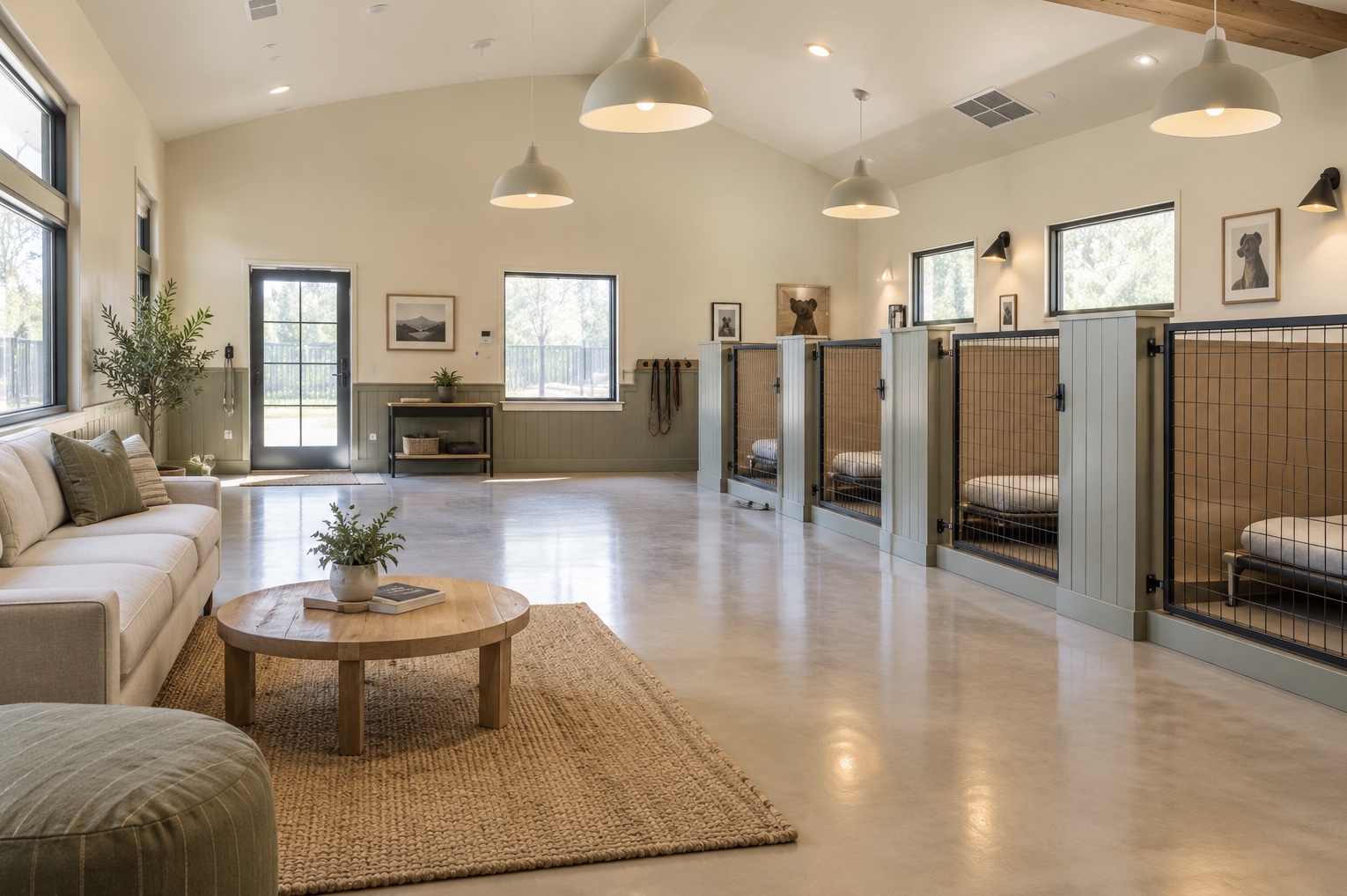
The board-and-train room: individual kennel suites with raised beds, alongside a seating area.
The format

Little and often, in real places.

Dogs do not learn in hour-long blocks. They learn in five and ten-minute reps spread across a day, in enough different places that the behavior stops depending on the room it was taught in.

That is the advantage of board and train: I can give your dog six or eight short sessions a day in a rotation of environments, which is more structured practice in a week than most working owners can manage in three months. It is not magic, it is just volume applied properly.

  • Six to eight short training sessions daily
  • A rotation of environments — home, street, parks, shopfronts, parking lots
  • Decompression and rest deliberately scheduled, not squeezed in
  • A small number of dogs at a time, so nobody is warehoused
Choose a length

Three tracks.

Which one you need comes out of the assessment. I would rather move you down a track than sell you a longer one.

Two weeks

Reset

For a dog with decent foundations that has drifted, or a young dog that needs its manners installed properly the first time.

  • House manners and settling
  • Loose-lead walking
  • Sit, down, place, and stay with real duration
  • Recall in low distraction
  • One handover lesson
Four weeks

Foundation

The one most dogs need. Enough time to build the behavior and then generalize it somewhere that actually counts.

  • Everything in the two-week track
  • Recall proofed under real distraction
  • Door manners, greetings, and impulse control
  • Public outings — patios, shops, busy sidewalks
  • Two handover lessons
Six weeks

Advanced

For off-lead reliability, harder distraction thresholds, or a service dog candidate that needs a concentrated foundation block.

  • Everything in the four-week track
  • Off-lead work where the environment allows
  • Extended settles in demanding environments
  • Service dog foundation block, if that is the goal
  • Two handover lessons plus a follow-up visit

Every track includes: a written intake and training plan, photo and video updates every few days, a full written report at the end, and thirty days of email support once your dog is home.

The part that matters

The handover is not a formality.

Here is the honest failure mode of board and train, and any trainer who does not warn you about it is not being straight with you: the dog goes home trained, the household goes back to what it was doing, and within a month the dog is back where it started.

The dog is not the hard part. Changing what happens in your kitchen at six in the evening is the hard part. So the handover lessons are non-negotiable, and I would rather you booked a shorter track and actually did the follow-through than a longer one you treated as a drop-off.

You watch

I run the dog through everything it now knows, and explain what I am doing and why at each step.

You do it

You take the lead and I coach your timing, your mechanics, and your criteria until it is yours.

You keep it

A written maintenance plan, plus thirty days of email support for the questions that only surface at home.

Before booking

What your dog needs.

Requirements

  • Current on core vaccinations, plus Bordetella, with records
  • On year-round flea and tick prevention
  • At least sixteen weeks old
  • No bite history involving people
  • A completed intake form and a pre-boarding meeting

What to send with them

  • Their usual food, measured out for the stay
  • Any medication, with written dosing instructions
  • A flat collar or harness and a six-foot lead
  • One item that smells like home — a bed cover or worn shirt
  • Your vet's details and an emergency contact

On dogs I turn away: I do not take dogs with a history of biting people into board and train. It is not a fit for a group living situation and it is not fair to the dog. If that is your situation, email me anyway — I will point you toward a veterinary behaviorist who handles it properly.

Check availability.

Board and train runs with a small number of dogs at a time, so dates book out ahead. Send me your dog's details and what you are hoping to change.

Request a consultation Service dog programs